
Speech & debate training that incorporates gamification offers numerous benefits, supported by recent research and widely accepted insights. It fosters engagement, boosts motivation, enhances communication skills, and improves critical thinking—benefits particularly relevant for debate classes online, public speaking courses, and debate classes for high school students. The integration of game mechanics into debate training creates an interactive, fun, and impactful learning experience, making the development of soft skills more effective and enjoyable.
The Impact of Gamification on Speech & Debate
Gamification in speech & debate training transforms traditional learning methods into immersive experiences where students are motivated by incentives, competition, and social interaction. This approach leverages game elements like points, badges, leaderboards, challenges, and immediate feedback to promote active participation and foster a deep understanding of debate concepts. Such gamified debate training embodies a perfect blend of competition and cooperation, as students work together on teams while challenging each other to improve.
Adding to this, the freedom for students to experiment with different arguments and strategies without fear of harsh judgment sparks creativity and fosters a growth mindset, essential for lifelong learning. Immediate feedback post-debates, whether in the form of scores or critical appraisals, helps students learn in real time, sharpening their communication skills effectively.

How Gamification Boosts Debate Class Effectiveness
Increased Engagement and Motivation
By introducing competitions, rewards, and level-based progress, debate classes become more captivating, especially for high school students. Engagement is significantly enhanced when students see their progress and achievements, compelling them to participate repeatedly. This repeated investment nurtures resilience and persistence, traits invaluable not only in debate but in many areas of life.
Enhanced Critical Thinking and Problem-Solving Skills
Gamified debate formats encourage learners to analyze topics critically, develop strategies, and present compelling arguments. This active decision-making process, coupled with instant feedback from peers or instructors, helps refine their reasoning and presentation skills. It also improves cognitive functions like memory retention and information processing.
Promotes Collaboration and Social Interaction
In debate classes, especially those conducted online, gamification techniques nurture teamwork. When students work together to prepare arguments or respond to challenges, they develop interpersonal and cooperative skills crucial for effective communication and collaboration. This social aspect fosters a supportive learning environment where peer feedback becomes a powerful tool for growth.

Builds Confidence and Reduces Anxiety
Gamification creates a safe and fun environment where making mistakes is seen as part of the learning process. The immediate feedback and recognition help students overcome fears of public speaking and boost their confidence over time. Celebrating small achievements via badges or leaderboards validates effort, driving continuous improvement and reducing performance anxiety.
Key Components That Make Gamification Effective for Speech & Debate
- Freedom to Make Mistakes: Students can experiment with different arguments and styles without fear of harsh judgment, fostering courage and growth. Gamification encourages risk-taking within supportive boundaries, essential for mastering public speaking and debate.
- Immediate Feedback: Fast, constructive responses from judges or peers help students understand their strengths and weaknesses, encouraging continuous learning and quicker skill acquisition.
- Social and Cooperative Elements: Team debates and collaborative challenges enhance peer learning, making students feel connected and supported. The balance of competition with collaboration mirrors real-world communication dynamics.
Why Online Debate Classes Can Benefit from Gamification
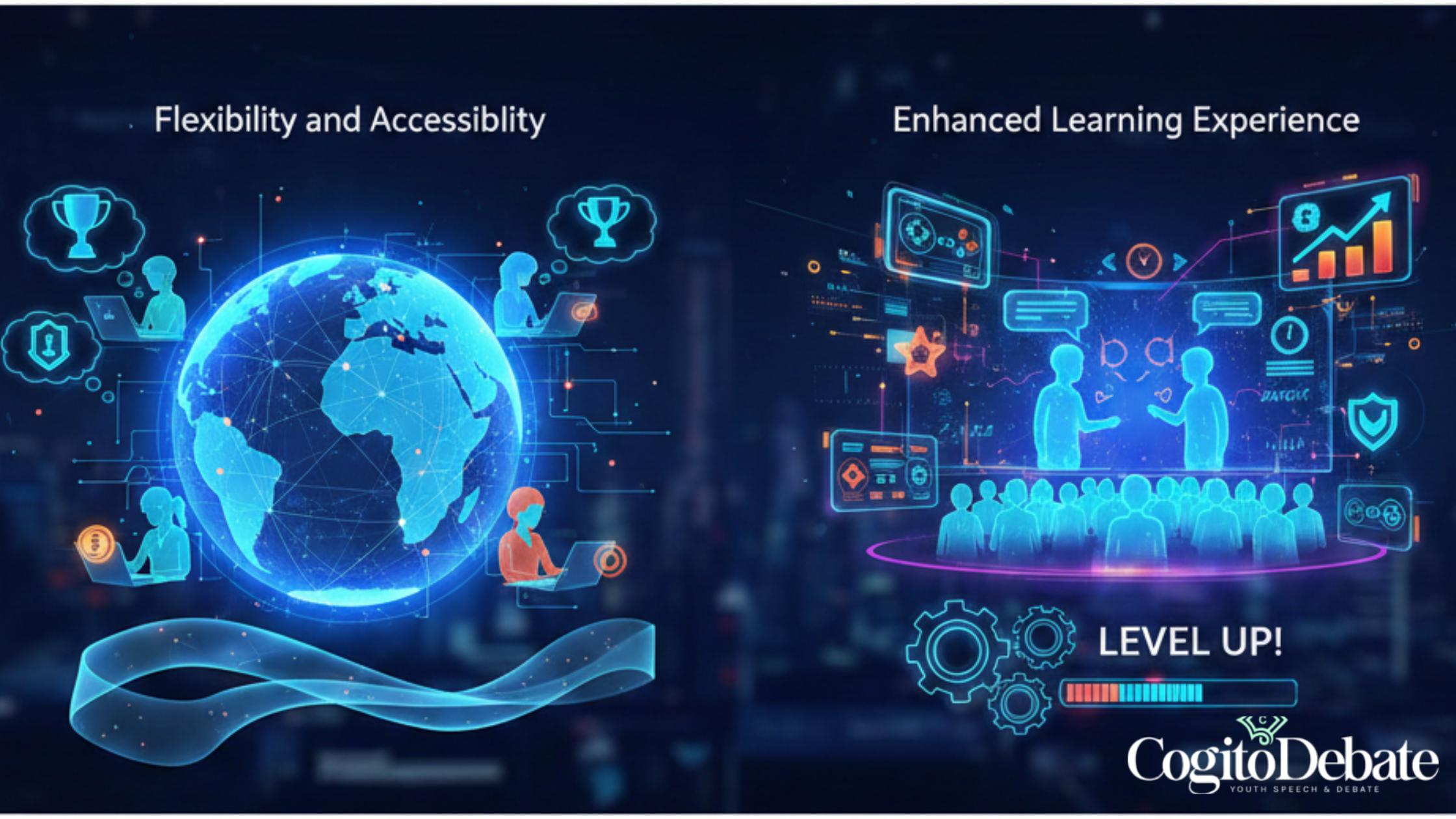
Flexibility and Accessibility
Online debate classes allow students from diverse locations to participate actively in gamified activities. They can earn rewards and compete in real time, creating a dynamic virtual environment that closely mirrors traditional debate settings. This digital connectivity enables more frequent interactions and greater inclusivity.
Enhanced Learning Experience
Gamification makes remote learning more interactive, encouraging sustained participation and deep engagement. The instant evaluation possible with gamification supports timely adjustments to teaching strategies and individualized student support. It also keeps students accountable for their learning journey.
Top Features of a Speech & Debate Gamification Framework
- Reward systems such as badges and leaderboards recognizing eloquence, originality, and persuasive skills.
- Interactive challenges focused on impromptu speaking, argument formulation, and rebuttals.
- Peer-to-peer voting and scoring fostering collaboration and constructive feedback.
- Levels or stages aligned with debate experience, motivating students to progress steadily.
Implementing Gamification in Your Debate Curriculum
Start gradually by incorporating simple rewards and challenges, such as point systems and badges for participation and wins. Use digital platforms supporting interactive quizzes, live leaderboards, and virtual debate tournaments to widen engagement. Foster peer feedback and collaborative problem-solving to encourage active participation and social learning. Regularly evaluate and adapt the gamification system based on student feedback and success metrics to optimize learning outcomes.
Adding variety through different game formats and personalized challenges can keep students motivated and invested. Combining gamification with traditional teaching methods also ensures a well-rounded learning experience, catering to different learning styles and preferences.
Final Thoughts
The speech & debate landscape is evolving rapidly, and gamification is proving to be a transformative catalyst. It energizes students, makes learning fun, and develops crucial soft skills such as critical thinking, communication, and teamwork that are valuable far beyond the classroom. Whether you are conducting debate classes online or in person, integrating gamification techniques can transform your program into an engaging and effective learning hub. Explore different tools and platforms that make this transition seamless—and watch your students thrive in a supportive and stimulating environment!